You finally had that old tree taken down. The yard looks better already — until you look down and realize the stump is still there, stubborn as ever.
Whether it’s an eyesore in your front lawn, a tripping hazard near a walkway, or a barrier to a landscaping project you’ve been planning for months, that leftover stump needs to go.
The two most common tree stump removal methods are stump grinding and full stump removal. They’re often confused for the same thing but they’re very different processes, with different costs, timelines, and long term outcomes for your property.
This guide breaks down both methods clearly so you can make the right call for your yard, your budget, and your plans.
What Is Stump Grinding?

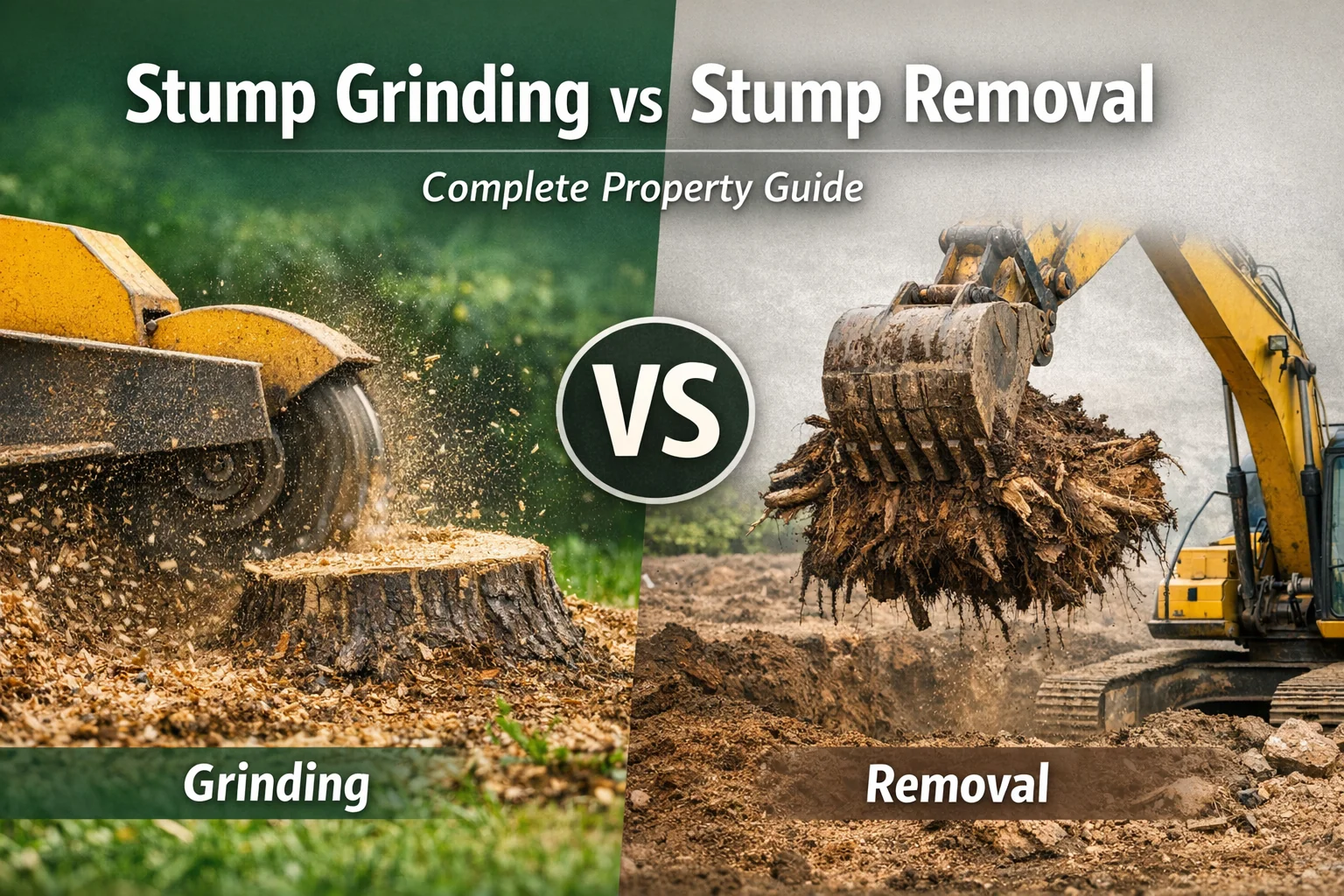
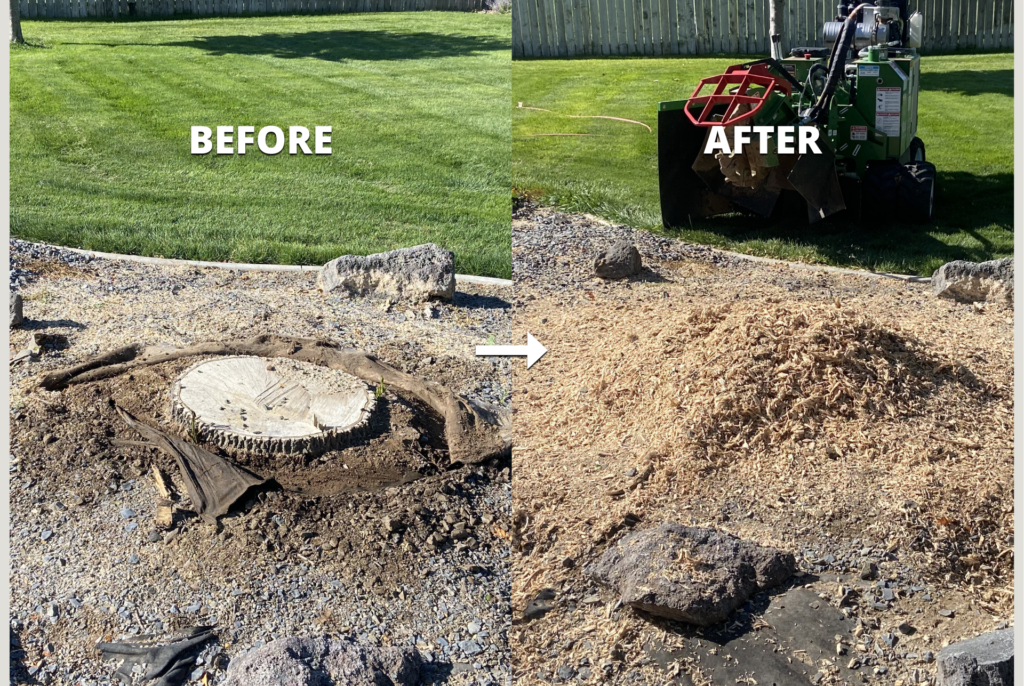
Stump grinding uses a powerful rotating machine called a stump grinder to mechanically chip away the stump down to several inches below ground level. The machine grinds the wood into small chips and sawdust, which are then either removed or left on site as mulch.
What remains after stump grinding:
- The root system stays intact underground
- A mound of wood chips sits where the stump was
- The ground is leveled but not fully restored
The grinding process is fast. Most stumps are fully ground down in under two hours. The roots left behind will naturally decay over time, typically within three to seven years depending on the tree species and soil conditions.
What Is Full Stump Removal?
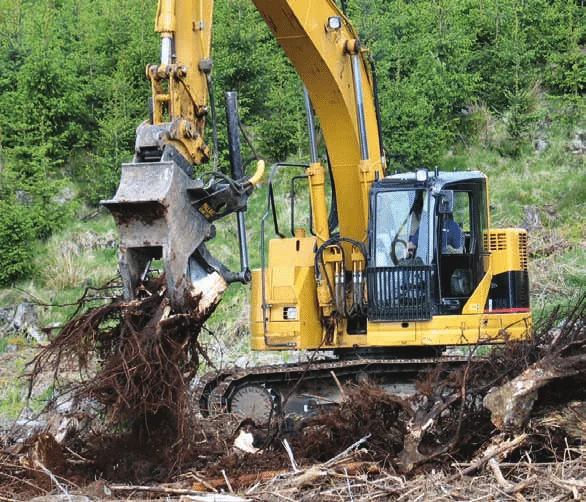
Full stump removal is exactly what it sounds like. The entire stump and its root system are extracted from the ground. This is done using heavy excavation equipment such as backhoes, stump pullers, and heavy duty chains to dig out, loosen, and physically pull the stump and roots from the soil.
What remains after full stump removal:
- A large hole or trench where the stump and roots once were
- Clean, root free soil ready for new construction or planting
- A significant amount of fill dirt needed to restore the area
The key difference between stump grinding and removal becomes most apparent in what is left behind. Grinding leaves roots. Removal leaves a hole. Both have valid use cases but neither is universally better.
Side by Side Comparison
| Factor | Stump Grinding | Full Stump Removal |
|---|---|---|
| Average Cost | $100 to $400 per stump | $300 to $1000+ per stump |
| Time to Complete | 30 minutes to 2 hours | 2 to 6+ hours |
| Equipment Required | Stump grinder | Excavator, backhoe, puller |
| Root System | Left in ground (decays naturally) | Completely extracted |
| Yard Disruption | Minimal | High |
| Restoration Needed | Minor | Major |
| Environmental Impact | Low | Moderate to high |
| Best For | Lawns, aesthetics, routine clearing | Construction, replanting, drainage |
| Regrowth Risk | Low | None |
| DIY Feasibility | Possible with rental equipment | Not recommended |
Cost is often a deciding factor for homeowners. If you’re looking to manage expenses without sacrificing quality, check out our guide on affordable tree care without compromising quality for practical tips.
Benefits of Stump Grinding
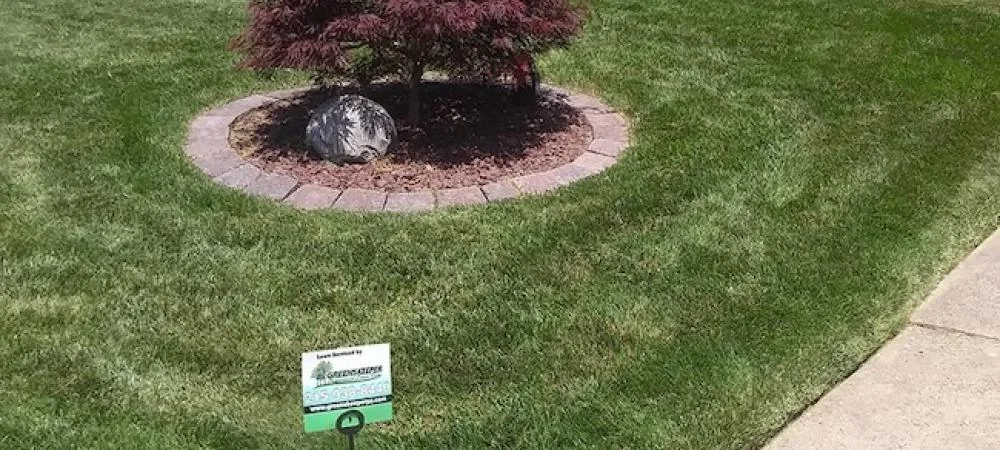
Stump grinding is the most popular choice for homeowners and for good reason.
1. It’s faster and more affordable.
For the average residential property, stump grinding gets the job done in a fraction of the time and at roughly half the cost of full removal. If you have multiple stumps, the savings multiply quickly.
2. It causes minimal disruption to your landscape.
Because the root system stays underground, there’s no massive hole to fill. The surrounding lawn, garden beds, and hardscape remain largely undisturbed. After the chips are cleared and a thin layer of topsoil is added, the area can be reseeded within days.
3. The environmental footprint is lower.
Leaving roots in the ground actually supports soil health. As they decompose, they add organic matter back into the soil and support microbial activity. No heavy excavation means less soil compaction and less disruption to neighboring plants.
4. It’s practical for most standard landscaping goals.
Want to mow over that area without hitting anything? Plant grass or a garden? Install a fence line? Stump grinding handles all of these scenarios without overcomplicating the process.
Improving your landscape not only makes your yard safer but also increases overall property appeal. If you’re planning upgrades, you can explore how professional services impact resale in our guide on how tree services can boost your property value.
When Full Stump Removal Makes More Sense
While grinding wins in most residential scenarios, there are specific situations where full stump removal is the smarter investment.
You’re planning new construction on the site.
If a driveway, foundation, pool, or structural addition is going in where the tree stood, buried roots are a serious problem. Decomposing roots can create voids in the soil that compromise structural integrity over time. Full removal ensures a clean, stable base.
You want to replant a new tree in the same spot.
New tree roots need space and nutrients. Competing with a decaying root system, which can also harbor fungi and disease, puts the new tree at a disadvantage from day one. Full removal gives you a fresh start.
Drainage issues are a concern.
Old root systems can block or redirect underground water flow. If you’re regrading your yard or installing a drainage system, removing the root system entirely prevents future complications.
The stump is from a disease prone species.
Certain tree species, like elms and oaks, are susceptible to root diseases that can spread through soil contact. If disease was involved in the tree’s removal, keeping the root system in place can pose a risk to surrounding healthy trees.
Best Use Cases at a Glance
| Choose Stump Grinding | Choose Full Stump Removal |
|---|---|
| Want a fast, affordable solution | Breaking ground on new construction |
| Replanting grass or garden over area | Planting a new tree in same location |
| Have multiple stumps to clear | Dealing with drainage or grading issues |
| No major construction planned | Had a diseased tree removed |
| Improving curb appeal before a sale | Need a completely root free site |
Expert Recommendation by Property Type
| Property Type | Recommendation | Reason |
|---|---|---|
| Residential Lawn / Garden | Stump Grinding ✓ | Cost effective, minimally invasive, adequate for lawn use |
| Rental / Commercial | Grinding (routine), Removal (renovation) | Depends on planned improvements to property |
| Vacant Land / Land Clearing Tampa | Combination Approach | Grind non build zones, remove stumps in build zones |
| Agricultural / Rural Land | Full Stump Removal ✓ | Prevents interference with tilling, irrigation, crops |
Your Decision-Making Checklist
Answer these to find your best option
Before you call a contractor, run through this quick checklist to clarify which method fits your situation.
Go with Stump Grinding if you check YES to most of these:
- The stump is in a lawn or garden area with no construction planned
- You want the job done quickly and affordably
- You’re okay with the root system decaying naturally underground
- You plan to replant grass, shrubs, or a garden (not a new tree) in the area
- The tree was healthy with no disease or fungal issues
- You have multiple stumps to clear
Go with Full Stump Removal if you check YES to most of these:
- Construction, a foundation, or hardscape is planned for the site
- You want to plant a new tree in the exact same location
- The tree was diseased or infested
- You’re regrading the yard or installing a drainage system
- You need the area to be completely root free for structural reasons
- Budget is less of a concern than a clean, complete result
The Bottom Line
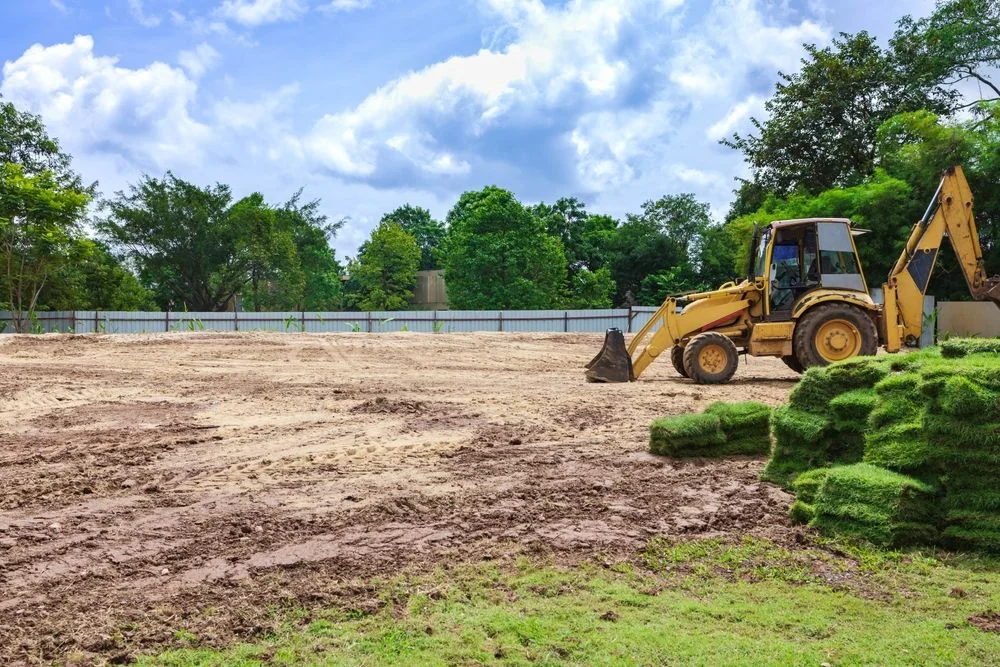
“Stump grinding is the right choice for most property owners, most of the time.”
It’s efficient, cost effective, and more than adequate for standard landscaping and lawn care goals. The roots left behind are not a problem. They are simply organic material that breaks down and enriches the soil over time.
Full stump removal is a targeted solution for specific situations, primarily construction, replanting, or disease management. It’s more disruptive and more expensive, but when the situation calls for it, it’s worth every dollar.
The mistake most homeowners make is not choosing the wrong method. It is making the decision without understanding what comes after. Ask your contractor not just about the process, but about what the site will look like once they are done and what you will need to do to restore it. That conversation changes everything.