As a homeowner in Tampa, you know that our lush, tropical canopy is part of what makes Florida living so beautiful. However, that same vigorous growth can quickly turn from a landscape asset into a structural liability. Have you noticed oak limbs rubbing against your shingles during a summer thunderstorm? Or perhaps your driveway is disappearing under a mess of debris, and your overhead power lines are looking a bit “crowded” by encroaching branches?
Ignoring these signs isn’t just a cosmetic issue; it’s a risk to your home’s integrity. This is where clearance pruning becomes your property’s best line of defense.
In this thorough guide, we’ll examine why professional pruning is essential, the dangers of DIY “hacks” like topping, and how to keep your trees healthy while keeping your infrastructure safe.
What is Clearance Pruning?
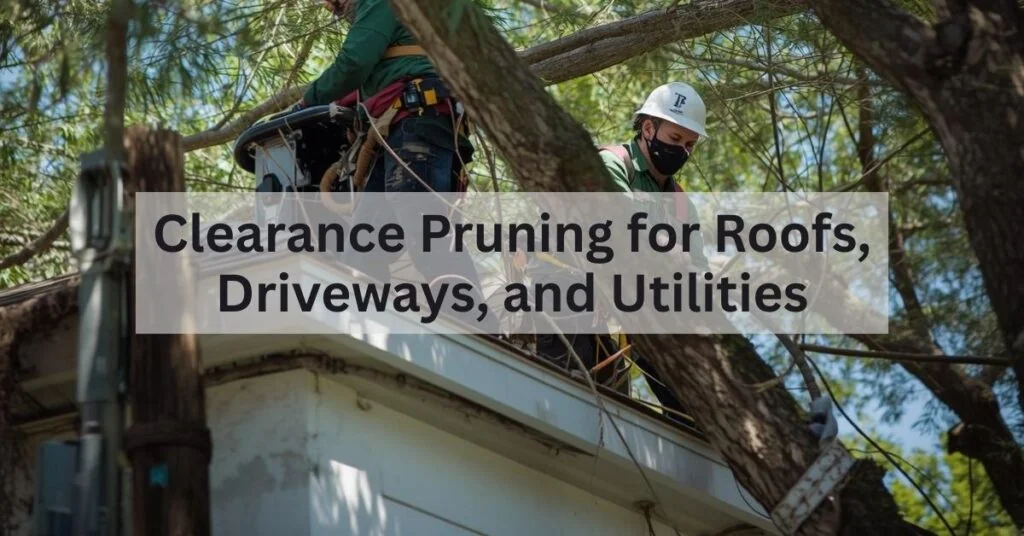
Clearance pruning is a specialized structural pruning technique designed to create a specific vertical or horizontal distance between tree branches and fixed objects like houses, power lines, or walkways.
Unlike simple clipping or shearing, which often focuses on a shrub’s aesthetic “shape”, clearance work is about safety, longevity, and compliance with local ordinances. According to the International Society of Arboriculture (ISA), proper clearance ensures that a tree can coexist with urban infrastructure without requiring drastic, health-compromising cuts later.
1. Roof and Structure Protection: Avoiding the “Scrape”
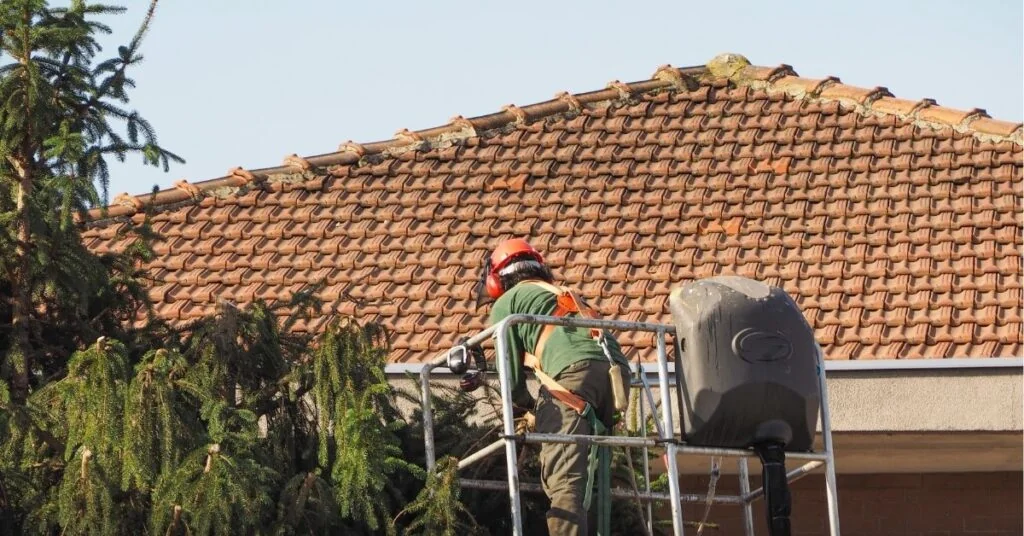
Your roof is likely your home’s most expensive component. When trees grow too close, they cause damage in three primary ways:
- Mechanical Abrasion: Constant wind causes branches to act like sandpaper, stripping the granules off asphalt shingles or cracking tiles.
- Moisture Retention: A compact canopy over a roof prevents evaporation. This leads to moss, algae, and eventually, wood rot.
- Pest Highways: Overhanging limbs are bridges for squirrels, rats, and carpenter ants to enter your attic.
2. Driveways and Walkways: Managing the “Lower Canopy”
Low-hanging branches are more than just a nuisance for your SUV; they are a liability for pedestrians. Clearance pruning over driveways and sidewalks involves “skirting” or “lifting” the canopy.
The Dangers of “Lopping” and “Docking”
Inexperienced workers often resort to lopping (randomly cutting large branches to stubs) or docking (shortening branches without regard to the tree’s vascular system). These practices create “water sprouts” — weak, fast-growing vertical shoots that break easily in high winds.
Instead, professional arborists use thinning cuts. By removing specific lateral branches, we reduce the limb’s mass and increase sunlight infiltration without compromising the tree’s natural form.
3. Utility Line Clearance: A Matter of Safety
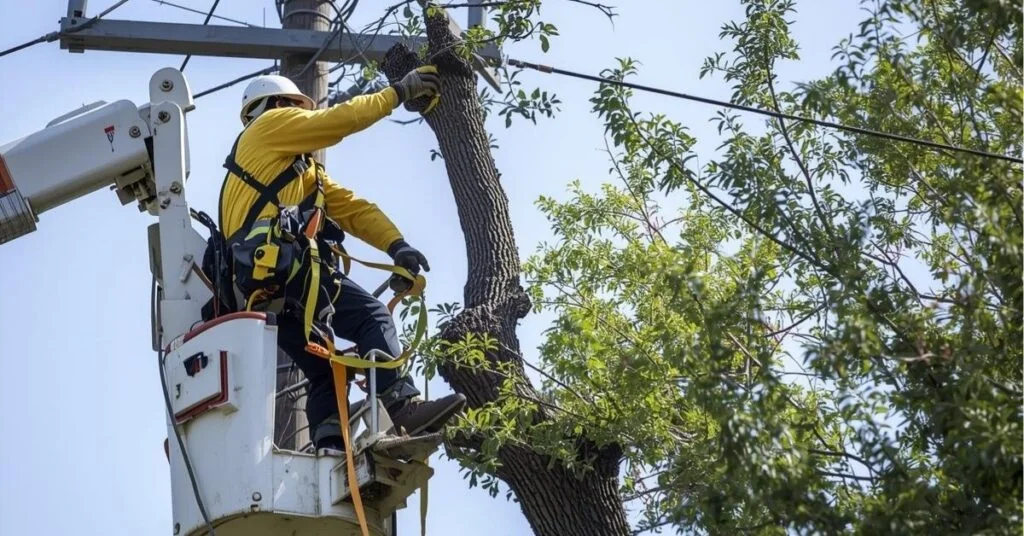
Navigating trees around power, cable, and phone lines is the most dangerous aspect of tree care. In Florida, utilities often have the right to trim trees that interfere with their lines, but their goal is “power reliability,” not necessarily “tree health.”
- Service Drops: These are the lines running from the pole to your house. Homeowners are typically responsible for keeping tree clearance here.
- Primary Lines: Never attempt to prune near high-voltage lines. This requires a Line-Clearance Certified Arborist.
Clearance pruning near utilities should always favor the “V-cut” or “Side-cut” method, which directs growth away from the wires rather than just cutting the tips back.
4. Seasonal Timing: When to Schedule Your Pruning
In Tampa, the timing of your tree work can determine how the tree recovers.
| Season | Priority | Benefit |
|---|---|---|
| Winter (Dec–Feb) | Major Structural Pruning | Trees are dormant; easier to see the branch structure. |
| Spring (Mar–May) | Thinning & Shearing | Perfect for managing the “spring flush” of new growth. |
| Summer (June–Aug) | Storm Prep Clearance | Removing deadwood and weight before peak hurricane season. |
| Fall (Sept–Nov) | Light Clipping | Minimal pruning to avoid stimulating new growth before cold snaps. |
5. Common Mistakes: Topping and Excessive Shearing
One of the most damaging practices we see in Florida is topping. This is the practice of cutting the top off a tree to “reduce its height.”
Why Topping is a Disaster:
- Starvation: It removes the tree’s food-producing crown.
- Shock: Sudden exposure to the sun can scald the bark.
- Weak Regrowth: The new limbs (water sprouts) are weakly attached and prone to snapping.
- Ugliness: It distorts the tree’s natural silhouette.
If a tree is “too big” for its space, topping is not the answer. Thinning or complete removal and replacement with a smaller species is a much more professional and cost-effective long-term strategy.
6. The Step-by-Step Professional Process
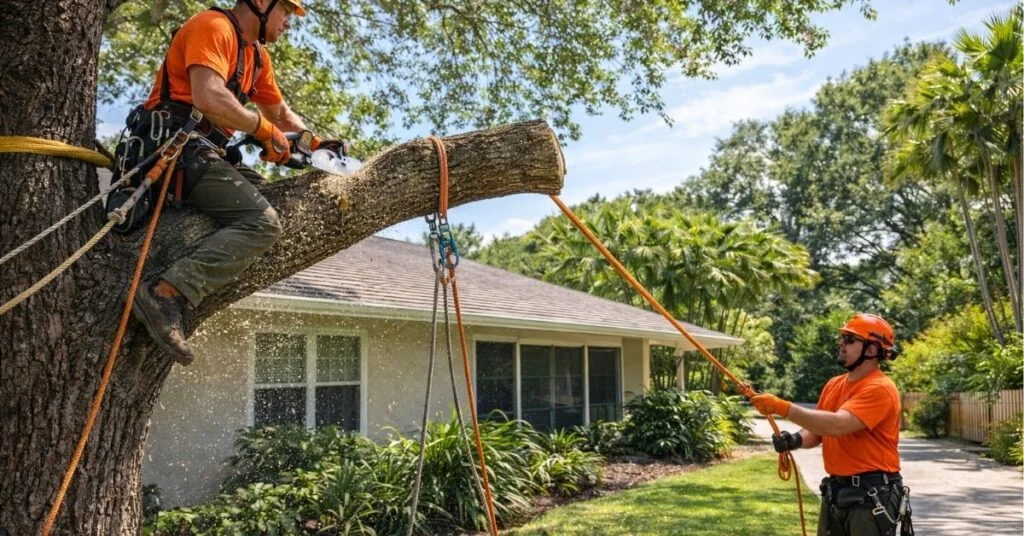
When you hire a professional for clearance pruning, here is what the process should look like:
- Site Assessment: Identifying “targets” (roofs, lines, sheds) and assessing tree health.
- The “3-Cut” Method: Ensuring large limbs are removed without tearing the bark.
- Structural Selection: Choosing the right parent stems to keep and which lateral branches to remove.
- Safety Zone Establishment: Dropping limbs safely using ropes and rigging to avoid hitting the very objects we are trying to protect.
- Debris Handling: Mulching the brush to provide nutrients back to the landscape.
7. Cost of Clearance Pruning in Tampa
Pricing varies based on the size of the tree and its proximity to hazards (such as power lines). On average, homeowners can expect:
- Minor Clearance (Small trees/Ground level): $250 – $500
- Standard Residential Pruning (Medium Oak/Maple): $600 – $1,200
- Large-Scale Structural Pruning (Mature Grand Oaks): $1,500 – $3,500+
While it may seem like an investment, compare this to the $10,000+ cost of a partial roof replacement or the liability of a fallen limb on a neighbor’s property.
Checklist for Property Managers
If you are managing a commercial property or HOA in Tampa, keep this checklist handy:
- Are any branches within 5 feet of building envelopes?
- Does foliage obstruct street signs or security cameras?
- Is there a “sight triangle” clearance at all driveway exits?
- Are any branches touching overhead service lines?
- Is there evidence of “pumping” (branches hitting each other and causing wounds)?
Protect Your Home Today
Is your canopy getting a little too close for comfort? Our team of certified arborists specializes in clearance pruning customized to the unique climate of Tampa, Florida. We understand the local growth patterns of Live Oaks, Slash Pines, and Palms.
Can I provide a free, no-obligation property assessment to identify your high-risk clearance areas?
Contact Us Today: 813-466-4344