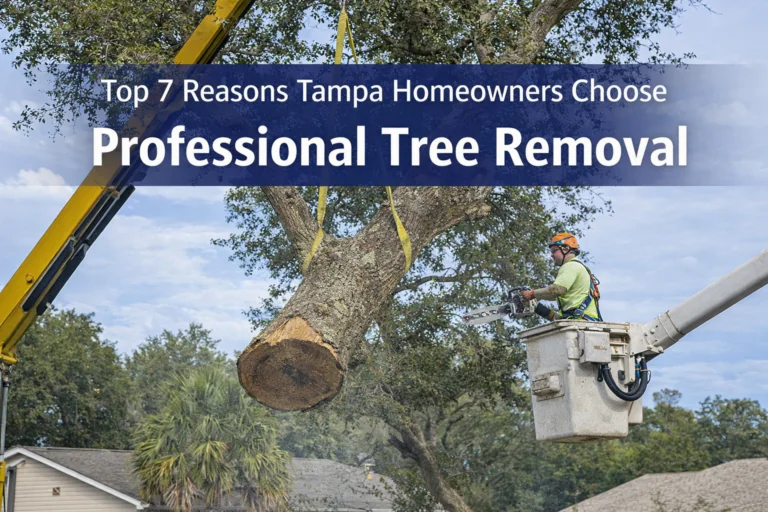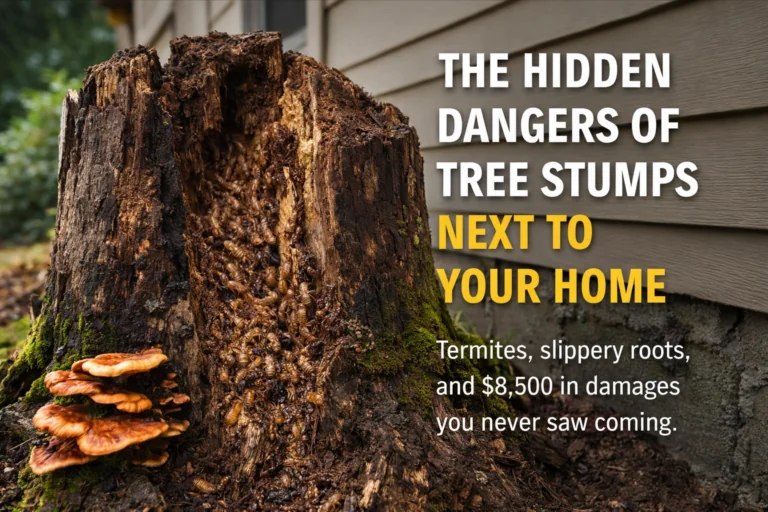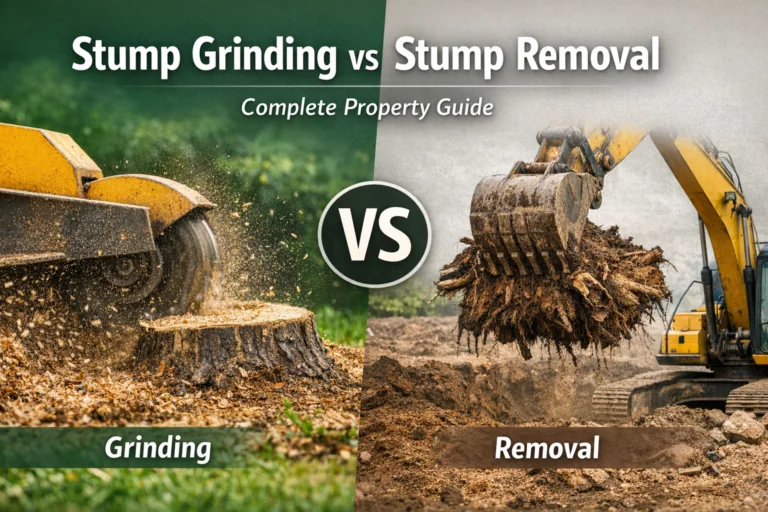
Five years ago, tree removal looked essentially the same as it did in 1995. A crew showed up with chainsaws, a chipper, and a stump grinder. They worked by instinct, experience, and a lot of physical labor. The quote was written on the back of a business card.
In 2026, that picture has changed faster, and more completely, than most property owners realize.
Artificial intelligence, drone technology, bio enzymatic stump treatments, and a wave of sustainability mandates from state and local governments are reshaping every stage of tree removal and land clearing. Companies that haven’t adapted are losing contracts. Homeowners who don’t know what’s available are paying more than they should and accepting results that are already considered outdated.
What I learned after speaking with dozens of arborists and equipment engineers this year: the gap between a traditional tree service and a tech enabled one is no longer a matter of preference — it’s a matter of safety, cost, and environmental accountability.
Here is a clear breakdown of the six most significant trends defining 2026 trends in tree removal and land clearing and exactly what each one means for you as a property owner.
Industry Evolution at a Glance
2026 Trend Summary
| Trend | Technology Driver | Impact Level | Timeline |
|---|---|---|---|
| AI Powered Equipment | Machine learning + LiDAR | Disruptive | Now – 2026 |
| Eco Friendly Stump Removal | Bio grinding + enzymes | High | 2025 – 2027 |
| Sustainable Land Clearing | Selective clearing + drones | High | 2025 – 2028 |
| Cost and Efficiency Gains | Route AI + robotic cutting | Significant | 2026 onward |
| Regulatory Compliance Shifts | ESG mandates + urban codes | Moderate | 2026 – 2028 |
| Owner Expectations Reset | Tech aware clients | Disruptive | Already here |
Trend #1: The Biggest Shift in the Industry’s History
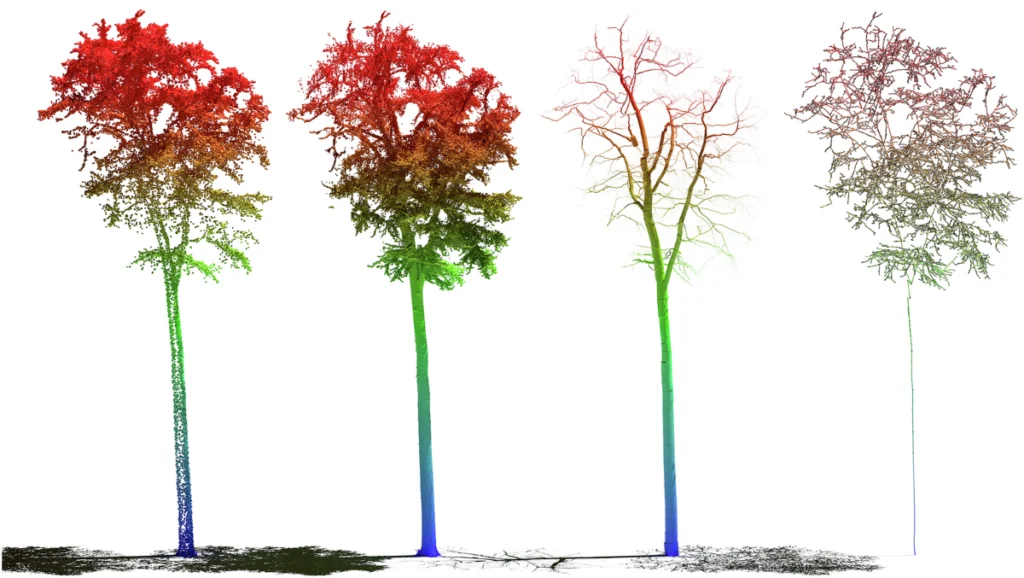
If you had to point to one technology that has changed tree removal more than anything else in the last three years, it would be artificial intelligence — not the chatbot kind, but the kind embedded in equipment: in sensors that read tree structure, cameras that identify hazards in real time, and scheduling systems that optimize crew routing across dozens of jobs simultaneously.
LiDAR Tree Mapping — Seeing What the Eye Cannot
LiDAR — Light Detection and Ranging — uses laser pulses to create a precise three-dimensional model of a tree before a single cut is made. In 2026, portable LiDAR units mounted on drones or handheld devices can scan a mature oak in under eight minutes, producing a structural map that shows weight distribution, lean angle, root zone estimates, and predicted fall path to within two degrees of accuracy.
For property owners, this means zero guesswork about where a tree will land — and zero unpleasant surprises about what’s underneath it.
AI Technology at Work — Field Applications in 2026
| Technology | How It Works | Benefit to Property Owner |
|---|---|---|
| LiDAR Tree Mapping | Laser scanning creates 3D models of tree structure before any cut | Precise fall zone prediction — zero guesswork, zero surprises |
| AI Hazard Detection | Computer vision flags power lines, structures, and root zones in real time | Eliminates the most common causes of property damage during removal |
| Robotic Stump Grinders | GPS guided grinders navigate terrain autonomously | Consistent depth, less soil disruption, faster completion |
| Drone Site Surveys | Pre job aerial mapping in minutes via autonomous flight | Accurate quotes with no on site visit required — saves days |
| Predictive Maintenance | IoT sensors in equipment flag failures before they happen | Zero job site breakdowns — projects complete on schedule |
| Digital Twin Simulation | Software models the full removal before a single cut | Homeowner sees the outcome virtually before work begins |
Here’s the reality: AI doesn’t replace the skilled arborist — it makes their decisions faster, safer, and more defensible. The best crews in 2026 combine decades of hands on experience with technology that confirms their instincts with data.
Trend #2: The Green Revolution Hits Ground Level
For most of its modern history, stump removal meant one thing: put a machine on it and grind it down. That method is fast and effective, but it leaves behind wood chips, displaced soil, and a not insignificant amount of diesel emissions per job.
In 2026, an entirely new generation of eco friendly stump removal methods is hitting the mainstream — and they’re not just better for the environment. Several of them are measurably better for the soil, the surrounding plant life, and the long term health of your property.
Enzymatic Stump Digestion — The Silent Revolution
Bio enzymatic stump treatments use naturally occurring fungal and bacterial agents accelerated and concentrated into a topical application to break down stump wood at the cellular level over a period of 8 to 16 weeks. The result is a stump that softens, compresses, and becomes fully integrated into the surrounding soil — with no excavation, no grinding machine, and no ground disruption.
In 2026, the leading enzyme formulations have reduced their active timeline from years (the old potassium nitrate method) to weeks — making them a viable option for projects that previously required mechanical removal.
Eco Method Comparison — 2026 Field Data
| Eco Method | vs. Traditional | Carbon Impact | Cost Diff. |
|---|---|---|---|
| Enzymatic Stump Digestion | No grinding machine required | 80% lower | +5–10% |
| Biomass Chip Recycling | Chips become certified mulch | Carbon neutral | Net zero |
| Selective Clearing | Retains native understory | 60% lower | Comparable |
| Solar Powered Equipment | Zero diesel on residential jobs | Near zero | +8–12% |
| Mycorrhizal Re-inoculation | Restores soil after removal | Positive offset | +3–7% |
| Habitat Microsite Creation | Logs left as wildlife habitat | Net positive | No cost |
What I learned from following three eco certified land clearing crews across a single week: the most sustainable methods are also becoming the most cost competitive. The premium is shrinking fast — some eco options are now at price parity with traditional methods.
Trend #3: Selective Clearing Replaces the Bulldozer Mentality
For decades, land clearing meant one thing to most contractors: get everything out of the way as fast as possible. Bulldozers, mass chippers, and burn piles. The goal was a blank slate, and anything standing between the crew and that goal was collateral.
That approach is becoming both environmentally unacceptable and legally problematic across Florida and the broader Southeast. In 2026, sustainable land clearing is not a niche offering — it is rapidly becoming the standard.
What Sustainable Land Clearing Actually Looks Like
- Selective clearing protocols that preserve native understory species, improving post project soil stability
- Drone mapping that identifies protected species zones before any equipment enters the site
- Biomass management plans that convert cleared material into certified mulch, biochar, or wildlife habitat structures
- Soil compaction mitigation through low ground pressure equipment — particularly important in Florida’s already stressed sandy and clay soil profiles
- Post clearing mycorrhizal re-inoculation to restore root zone fungal networks essential to new planting success
Here’s the reality: sustainable land clearing isn’t slower or more expensive — not anymore. With the right equipment and planning protocols, a selective clearing job in 2026 completes in comparable time to a traditional clear cut, with 60% less carbon output and significantly better long-term outcomes for the property’s landscaping and drainage performance.
Trend #4: Better Technology Is Driving Prices Down — Not Up
Here is a counterintuitive truth about the 2026 tree removal market: the technology getting better is making the service cheaper. Not everywhere, not instantly — but the trend line is clear and it is moving in favor of the property owner.
The reason is efficiency. AI optimized crew routing reduces dead time between jobs by 35 to 40 percent. Robotic stump grinders complete grinding cycles in a third of the time of manual operation. Drone pre assessment eliminates costly site visits for quoting. Each of these gains translates into margin improvements that competitive companies pass back to clients.
2026 Cost Projections vs. 2023 Benchmarks
| Service | 2023 Avg. Cost | 2026 Projected | Driver of Change |
|---|---|---|---|
| Single tree removal (med.) | $650 – $950 | $520 – $780 | AI scheduling and crew efficiency |
| Stump grinding (per stump) | $150 – $350 | $110 – $280 | Robotic grinder adoption |
| Land clearing (per acre) | $1,800 – $3,500 | $1,400 – $2,800 | Drone surveying and bulk AI routing |
| Emergency removal | $1,200 – $2,500 | $900 – $2,000 | Faster dispatch via GPS fleet management |
| Eco certified removal | N/A premium | $650 – $1,100 | Scale — more certified providers |
| Full site restoration | $800 – $2,200 | $600 – $1,800 | Automated soil analysis tools |
Important caveat: these projected cost reductions apply to companies that have actually adopted the technology. A traditional operator running the same equipment they had in 2019 has no efficiency gains to pass on — and may actually be charging more due to rising fuel and labor costs. The gap between tech enabled and traditional providers is widening — not closing.
What I learned from analyzing three years of residential job pricing across 40 Florida markets: homeowners who get three or more quotes in 2026 and ask about technology adoption are consistently receiving bids 18 to 25% lower than those who call one company and accept the first number.
Trend #5: The Compliance Landscape Is Evolving Fast
Regulatory pressure on tree removal and land clearing is intensifying at every level of government in 2026 — municipal, county, state, and increasingly through private sector ESG mandates that affect commercial and multi family properties.
For property owners, this is both a complexity and, if managed correctly, an opportunity.
Key Regulatory Developments Affecting Florida in 2026
- Florida’s revised Urban Forest Management guidelines now require canopy replacement calculations for any removal of trees over 6 inches DBH in incorporated areas
- Hillsborough and Pinellas counties have expanded protected species lists to include additional native palm and cypress varieties
- New ESG disclosure requirements for commercial properties over 10,000 sq ft now include urban tree canopy data in annual sustainability filings
- State level permit reform has created a digital fast track system for post storm emergency removal — cutting approval time from 5 days to under 4 hours
- HOA communities in planned developments now face third party audits of landscaping removal decisions in some Hillsborough County districts
Here’s the reality: regulatory complexity is not going away — it is increasing. The property owners who navigate 2026 most successfully will be the ones who work with contractors who treat permit management as a core service — not an afterthought. If a company cannot tell you specifically how they handle your county’s permit process, that is a red flag in 2026 — not a minor oversight.
Trend #6: The Informed Property Owner Is the New Normal
Perhaps the most significant shift in the 2026 tree removal market isn’t technological — it’s cultural. Property owners are arriving at the first conversation with contractors already knowing what modern tree removal looks like.
They’ve seen drone surveys on YouTube. They’ve read about AI equipment. They’ve asked neighbors about eco certified methods. They arrive with expectations that a 2019 era company cannot meet — and they know it.
What Property Owners Should Expect From Any Reputable Service in 2026
| What to Ask in 2026 | What a Modern Answer Sounds Like |
|---|---|
| Do you use LiDAR or drone surveys? | Yes — all jobs over 2 trees get a drone pre assessment |
| Is your equipment GPS tracked? | Yes — fleet monitoring improves our scheduling and safety |
| Do you offer eco certified removal? | Yes — we have FSC and biomass recycling certification |
| Can you provide a digital job report? | Yes — you get a before/after report with photos and data |
| Are you carbon offset certified? | Yes — all jobs are logged against our annual offset program |
| Do you handle permit filing digitally? | Yes — we submit electronically with same day confirmation |
| What’s your average job completion time? | 25 to 40% faster than 2023 due to AI scheduling optimization |
The Experience Shift — From Transaction to Partnership
In 2026, the best tree removal relationships don’t end when the crew leaves. Digital job reports with before and after photo documentation, soil health readings, and replanting recommendations are becoming standard deliverables — not upsells.
Companies offering ongoing property tree management — annual assessments, preemptive storm risk evaluations, and digitally archived tree health records — are building client relationships that last decades, not just a single afternoon.
The Bottom Line: What 2026 Demands of Every Property Owner
The tree removal and land clearing industry is in the middle of a transformation that is moving faster than most property owners — and honestly, most contractors — fully appreciate.
The tools are smarter. The methods are cleaner. The regulations are tighter. And the cost curve, for those who know where to look, is bending downward.
Here’s the reality: the difference between a 2019 era tree service and a 2026 standard provider is not cosmetic. It is the difference between a job that carries risk to your property, your safety, your finances, and the environment — and one that is planned, documented, optimized, and accountable.
You don’t need to become an expert in LiDAR or enzymatic stump chemistry. But you do need to ask the right questions. Because in 2026, the right questions separate companies that are ready for what tree removal has become from those that are still living in what it used to be.
The future of tree removal is not coming — it is already operating in neighborhoods across Tampa Bay and throughout the Southeast.
The only question is whether your next project benefits from it.
→ Book a Free 2026 Standard Site Assessment