Trees bring shade, beauty, and long-term value to a property, but in Tampa, Florida, they can also become one of the most expensive surprises a homeowner or property manager ever faces. Over the years, working in professional tree care, I’ve seen the same pattern repeat itself: the call doesn’t come when a storm is approaching. It comes after the storm, when a heavy limb is already on a roof or a driveway is blocked by a fallen branch.
In most of these cases, the real problem didn’t start with the storm at all. It started months or even years earlier, with small warning signs that were easy to ignore: a cracked limb hanging over a roof, a heavy branch with a weak attachment, or internal decay hidden inside an older tree. Routine tree risk assessments show this again and again: most serious tree failures are predictable and preventable. With proper tree pruning, especially safety-focused and structural pruning, these risks can usually be corrected long before they turn into emergencies.
What Is Safety Pruning?
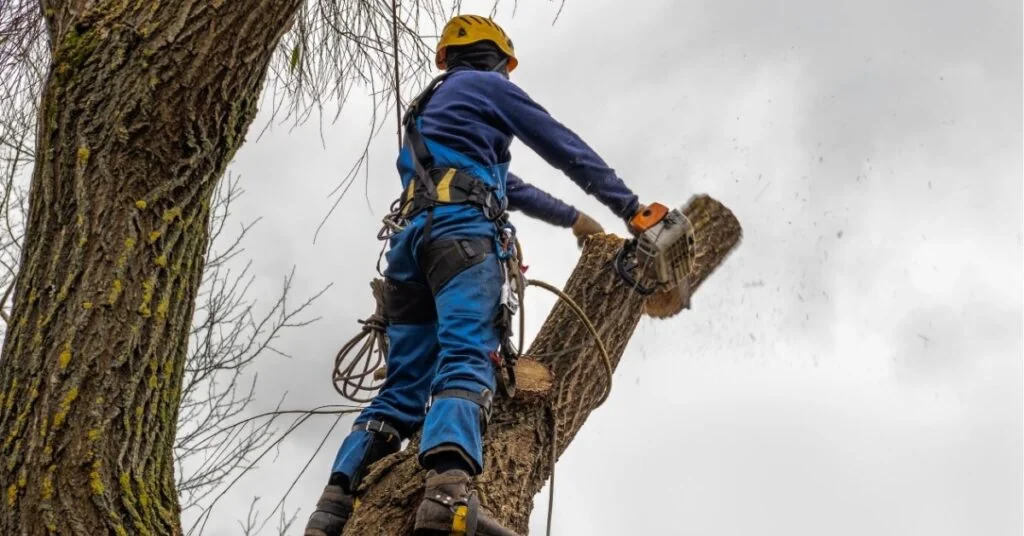
Safety pruning means removing branches that pose a real risk to people, buildings, vehicles, or infrastructure. The focus stays on structural and hazard-related issues rather than appearance.
Typical targets include:
- Dead or dying branches
- Cracked or weakened limbs
- Branches hanging over roofs, driveways, or walkways
- Limbs interfering with power lines or structures
- Crowded or poorly attached branches, often called weak branch unions
The main objective stays simple: lower the chance of failure and limit the damage if something goes wrong, especially during storms, high winds, or heavy rain.
Field experience shows an important truth. Risk-focused pruning does far more than qualify as “good practice.” Regular safety pruning is a core part of liability management for property managers and a practical way for homeowners to avoid emergency callouts, insurance claims, and unexpected repair bills.
Why Most Tree Damage Is Predictable
Storms rarely “cause” tree failures on their own. Storms usually expose weaknesses that already exist. A common sight across Tampa neighbourhoods offers a clear example. A mature live oak with a long, heavy limb stretching over a garden often looks stable in calm weather. A poor attachment angle or internal decay at the branch union completely changes the reality. Wind and heavy rain are the only triggers.
One real-world case from South Tampa illustrates this clearly. A routine inspection found a 12-inch limb extending over a driveway with early decay at the union. The limb was removed as part of a safety pruning plan. Two weeks later, a summer storm dropped similar limbs on nearby properties. That driveway avoided damage because the hazard had already been addressed.
Professional arborists generally evaluate three factors during inspections:
- Likelihood of failure – Does the structure show weakness or decay?
- Target – What sits under the area: a roof, parked cars, a walkway, or people?
- Consequences of impact – How serious would the damage or injury be?
In real-world inspections, overloaded limbs over roofs and driveways account for a large share of high-risk findings, often before any visible damage appears. Professional tree pruning addresses these predictable failure points before they become emergencies.
In many cases, the trees that fail during storms are the same ones that showed warning signs months earlier: dense canopies, weak unions, and long, overextended limbs over high-value targets like roofs and driveways.
In day-to-day work, this pattern shows up more often than people expect. During one routine inspection in South Tampa, a property owner called us for “just a quick trim.” On closer inspection, we found early decay inside a large limb hanging over the driveway. The limb looked fine from the ground, but a resistance drill test showed internal weakness. We removed it in the same week. Less than a month later, a strong storm hit the area, and two neighboring properties reported fallen limbs and vehicle damage. That one simple, preventive cut likely saved thousands in repair costs.
How Strategic Tree Pruning Prevents Property Damage
Reducing the Risk of Falling Branches
Falling limbs rank among the most common causes of tree-related property damage. Dead, diseased, or structurally weak branches often drop without warning, damaging roofs, vehicles, fences, or outdoor living spaces.
Safety pruning identifies and removes these high-risk branches early. A proactive approach like this significantly reduces the chance of sudden breakage, especially during Florida’s storm season.
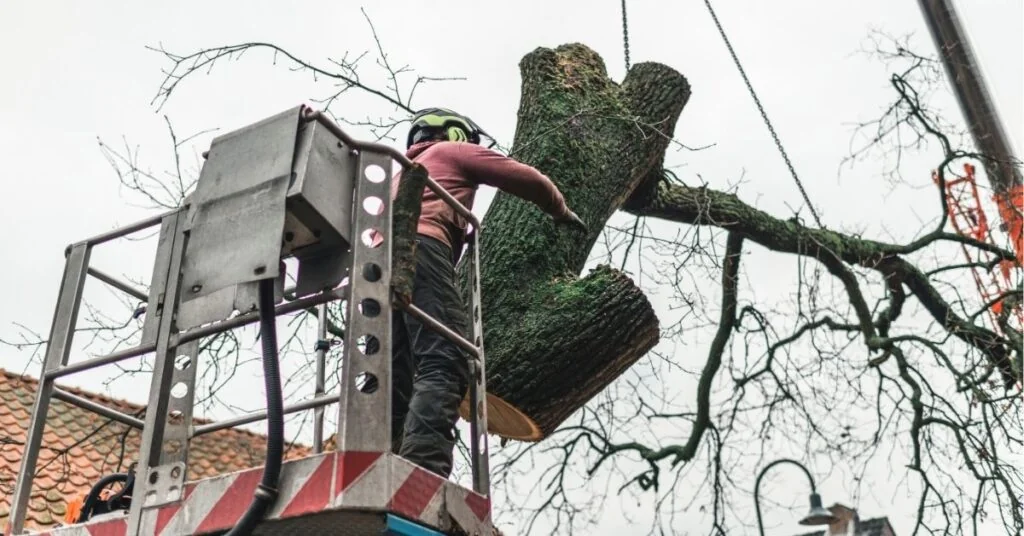
Professionals rely on specific methods such as deadwood removal, crown cleaning, and selective thinning. Tools commonly used include hand pruners, pole saws, chainsaws, and rigging systems for controlled lowering of heavy limbs near structures. In practice, experienced crews also use techniques like the three-cut method to prevent bark tearing and load-shifting cuts when working over roofs or driveways. For larger limbs, rigging ropes, friction devices, and controlled lowering systems are used so branches don’t swing or drop onto structures. These methods come from arborist safety standards and years of field work, not guesswork with a chainsaw. Proper equipment and technique protect both the property and the tree during the process.
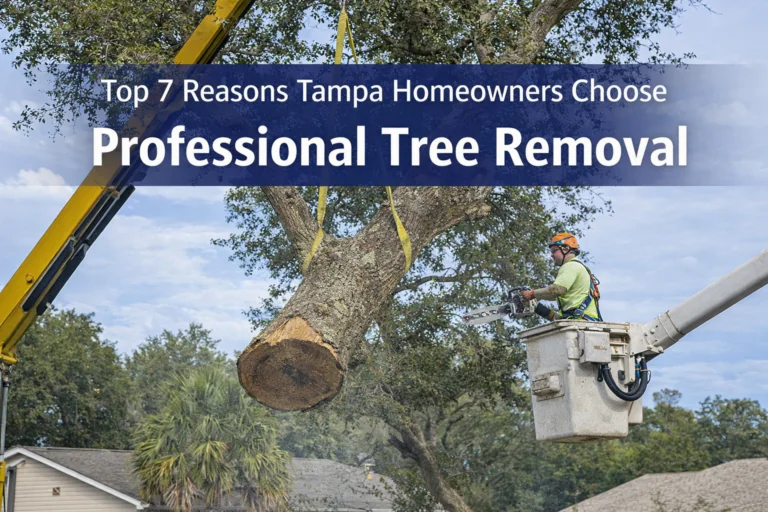
For example, when removing a heavy limb over a roof, professionals don’t just “cut and drop.” They use a three-cut method and rigging ropes to control the weight and direction of the fall, preventing damage to shingles, gutters, or nearby structures.
Preventing Roof and Structure Damage
Branches brushing against a home’s roof or siding do more than look untidy. Constant contact slowly wears down shingles, clogs gutters, and creates moisture problems. Over time, repair costs add up.
Regular tree pruning maintains safe clearance between trees and structures, protecting buildings from both sudden impacts and long-term wear and tear. Many homeowners are surprised to learn that routine pruning often costs a fraction of what roof repairs, fascia replacement, or water damage restoration can cost after a failure.
From a cost perspective, the difference is huge. A typical preventive pruning visit might cost a few hundred dollars, while repairing roof damage, replacing fascia boards, or dealing with water intrusion can easily run into thousands. Over the years, many homeowners have told us the same thing: they wish they had scheduled pruning earlier instead of paying for emergency repairs later.
In real-world jobs around Tampa, routine safety pruning usually costs a few hundred dollars, while even minor roof or gutter repairs after a limb strike can easily run into the thousands. That cost gap is why preventive pruning is one of the most budget-friendly forms of property protection.
Minimising Storm-Related Failures in Tampa’s Climate
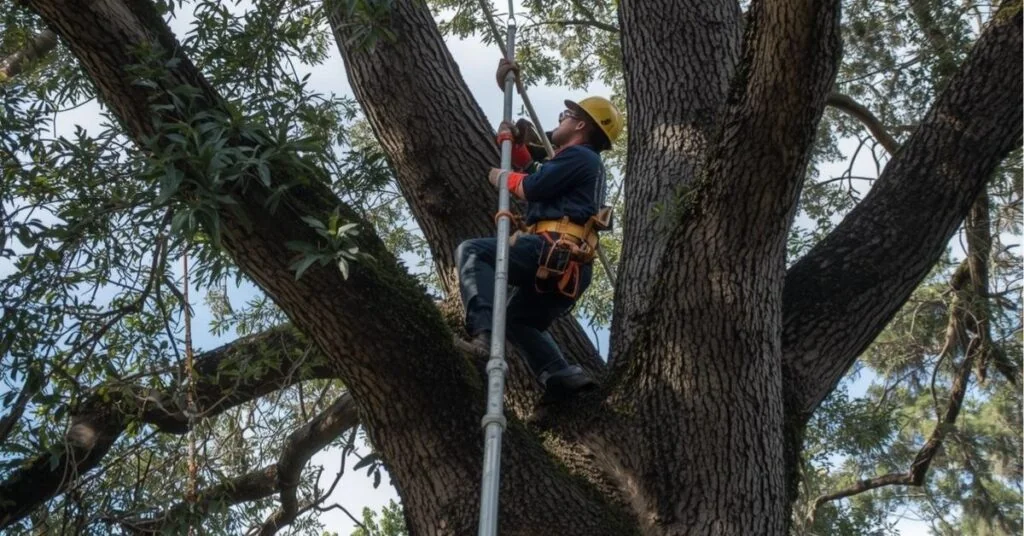
Trees with dense, unbalanced canopies or weak branch attachments are more likely to fail under stress. Tampa’s combination of heavy rain, gusty winds, and hurricane threats increases this risk every year.
Safety pruning helps by:
- Reducing wind resistance through selective canopy thinning
- Removing poorly attached or overloaded limbs
- Improving overall balance and structural stability
A well-pruned tree handles Florida’s weather far better, instead of becoming a hazard during severe conditions.
How Structural Pruning Prevents Tree Failure
Tree failure happens when a tree or a major part of it can no longer support its own weight or structural load. Large limb breakage or complete collapse often follows.
Improving Structural Strength
Both young and mature trees benefit from pruning for better tree health. Removing competing, poorly attached, or poorly positioned branches allows a stronger, more stable framework to develop.
Results include:
- Lower risk of split trunks and major limb failures
- Better weight distribution
- Stronger long-term structural stability
Professionals often refer to this process as structural pruning. Techniques such as subordination pruning and crown reduction guide growth in safer directions and reduce stress on weak points.
Reducing Excess Weight and Stress
Overextended or overcrowded branches place constant stress on weak junctions. Cracking, internal decay, and sudden breakage usually follow over time.
Professional tree pruning reduces this load in a controlled way using proper cut placement, three-cut pruning techniques, and rigging systems when necessary. Stress is reduced without harming the tree’s natural form or long-term health.
Catching Hidden Problems Early
A proper pruning visit also serves as a hazard tree evaluation. Trained professionals look for:
- Internal decay
- Structural cracks or splits
- Weak branch unions
- Signs of disease or pest damage
Early detection allows the area to be treated with pruning or corrective care before a minor issue becomes a dangerous, expensive problem.
What Professionals Look for First
During on-site inspections in Tampa neighborhoods, these are the red flags that show up most often before any visible failure happens:
- Overextended limbs hanging over roofs, cars, or walkways
- Signs of decay at branch unions or in major limbs
- Canopy imbalance that increases wind stress
- Previous storm damage that weakened the structure
- Species-specific failure patterns common in Florida trees
This type of checklist turns hidden risks into clear action steps rather than last-minute emergencies.
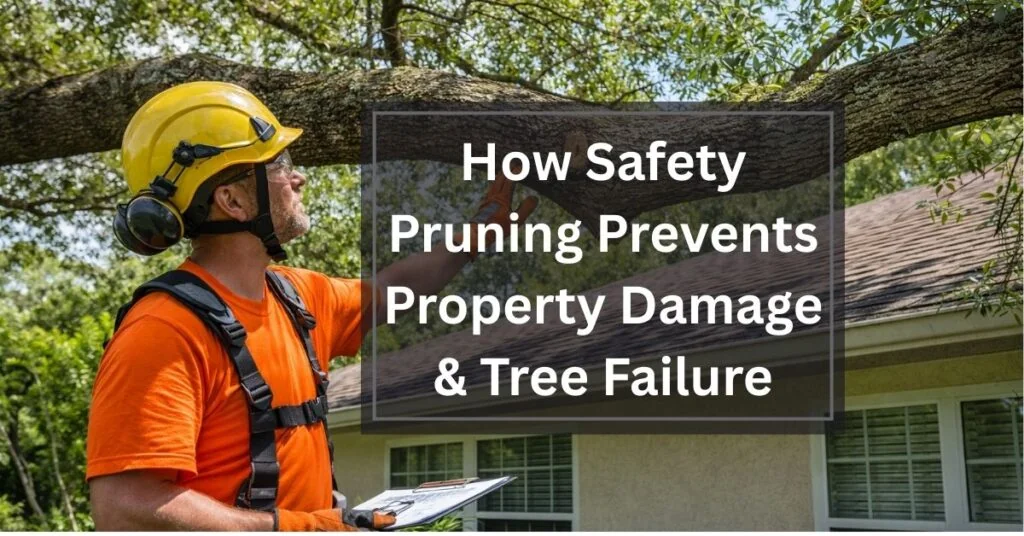
During inspections, professionals don’t rely on guesswork. Visual assessments are often combined with tools like mallets for sounding decay, a resistance drill for checking internal wood strength, and binoculars for canopy inspection. This step-by-step process helps identify risks that are not visible from the ground and allows pruning plans to be based on evidence, not assumptions.
The Role of Pruning in Tree Health
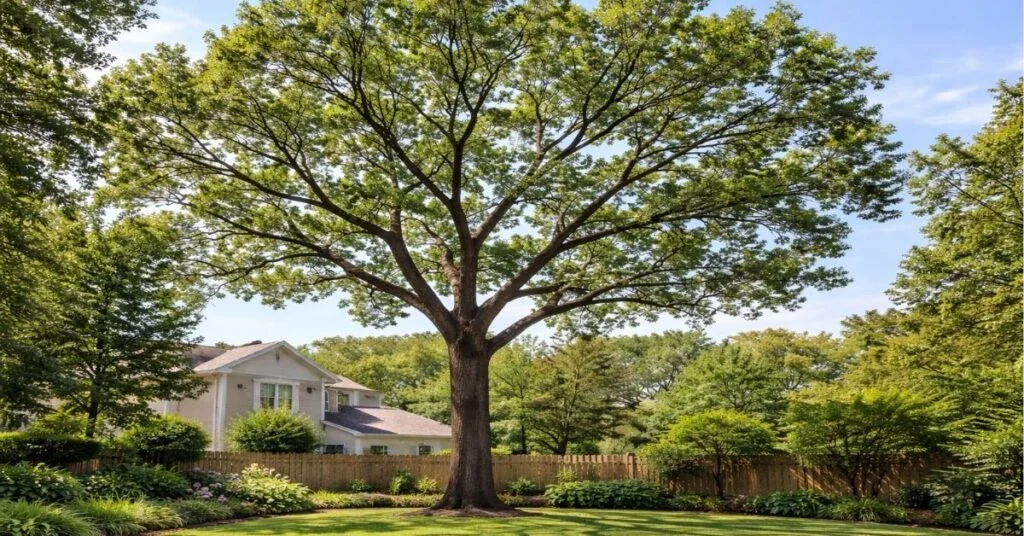
Homeowners and property managers often assume that pruning only improves safety or appearance. Long-term tree vitality depends heavily on proper pruning.
Encouraging Healthy Growth
Removing dead, diseased, or poorly placed branches lets the tree focus its energy on healthy growth.
Benefits include:
- Better canopy structure and leaf development
- Improved air flow and sunlight penetration
- Stronger resistance to stress, pests, and disease
Pruning for tree health and safety-focused pruning work together. Healthier trees remain stronger and more stable over time.
Preventing the Spread of Disease
Damaged or diseased branches act as entry points for pests and pathogens. Problems spread quickly when left untreated.
Regular tree pruning reduces these risks by removing affected areas early and supporting overall tree resilience.
DIY vs. Professional Tree Pruning: Where the Line Is
Small, light trimming might feel manageable for some property owners. Structural pruning, large limbs, and branches near buildings or power lines should never become DIY projects.
Improper cuts or overpruning can:
- Weaken the tree
- Create new entry points for decay
- Cause unstable or unsafe regrowth
- Increase long-term failure risk
Professional tree pruning relies on correct timing, proper tools, species-specific knowledge, and a clear understanding of tree biomechanics, not guesswork.
When Should You Call a Professional
A professional inspection makes sense if any of the following appear:
- Cracks in major limbs or the trunk
- Trees leaning or shifting after storms
- Large branches hanging over roofs, driveways, or parking areas
- Repeated limb drop or visible loss of strength
- Dense, unbalanced canopies that catch strong wind
Such warning signs often appear in tree risk assessments and should be addressed before emergencies occur.
A Smarter, Preventive Approach to Tree Care
Waiting for visible damage to appear is one of the biggest mistakes property owners make. Broken limbs and storm damage usually cost far more to fix than routine maintenance.
A preventive approach that includes regular inspections and safety pruning:
- Reduces emergencies
- Lowers the risk of property damage and liability
- Extends the life of valuable trees
- Creates safer, more reliable landscapes
Routine pruning also saves money over time. Emergency removals, roof repairs, and insurance claims often cost several times as much as scheduled maintenance.
The Smart Next Step
Trees remain valuable assets only when properly maintained. Tree pruning, especially when focused on safety and structure, stands among the most effective ways to prevent property damage and reduce the risk of tree failure.
Safety precautions are put in place to address hazards before emergencies occur. Pruning for tree health builds stronger, more resilient trees over time. Professional tree pruning keeps decisions strategic rather than reactive.
Homeowners and property managers in Tampa, FL, face unique weather challenges. The smartest next step stays simple:
Schedule a professional tree risk assessment to receive a clear, written plan showing which limbs pose a risk, what should be pruned now, and what can safely wait before the next storm tests your trees.